Under SEC Regulation Crowdfunding (Reg CF), everyday individuals no longer need Wall Street connections or accreditation to invest in early-stage green startups. Anyone can legally purchase equity or SAFEs in vetted companies solving ocean waste, clean energy, and sustainable food—starting with as little as $100.
Let me ask you an honest question: When was the last time you felt like your daily environmental efforts were actually shifting the needle?
If you are like most conscious citizens, you do your best. You carry reusable tote bags, choose the oat milk carton over dairy, buy organic produce at the grocery store, and separate your recyclables with precision. When the holiday giving season arrives, you write a $50 or $100 check to an ocean conservation non-profit or a wildlife trust.
Donating is great. Voting with your dollar in the supermarket aisle genuinely matters.
“Donating protects what is left. Consumer spending slows down the damage. But owning equity in the solutions rebuilding our planet? That is radical impact.”
There is a fundamental difference between being an eco-conscious consumer and becoming an equity co-owner in the technologies that will replace fossil fuels, clean the oceans, revolutionize agriculture, and eliminate toxic waste.
Yet for decades, everyday people have been stuck on the outside looking in. They care deeply about the planet, but they face a frustrating double hurdle: they can’t find companies that are genuinely sustainable, and when they do stumble upon one, they don’t know where or how to invest.
That era of financial gatekeeping is officially over.

The “Where & How” Dilemma: Why Good Intentions Get Trapped
The biggest barrier preventing conscious people from building wealth while healing the planet has never been a lack of passion. It has been an intentional wall of gatekeeping, complexity, and information asymmetry.
Consider what happens when an ordinary person decides they want to put real capital behind climate solutions:
1. The Discovery Void
Where do you even find early-stage companies solving climate and environmental crises before they become multi-billion-dollar giants? Unless you spend 40 hours a week reading patent filings or attending closed-door cleantech demo days in Silicon Valley, most transformative startups operate completely under the radar.
2. The Gatekeeper Myth ($50k Check Sizes & Wall Street Rolodexes)
For the past half-century, early-stage private investing was legally cordoned off for the ultra-wealthy. Under old SEC rules, only “accredited investors”—those with millions in net worth or high six-figure executive incomes—were permitted to back private startups. Venture capital funds required minimum checks of $25,000, $50,000, or even $250,000. Everyday people were told to stick to standard index funds.
3. The Public Market “ESG” Illusion
Disillusioned by venture gatekeepers, millions of eco-conscious investors turned to public ESG (Environmental, Social, and Governance) index funds and ETFs. But anyone who has ever looked under the hood of a mainstream ESG fund knows the disappointment: the top holdings are frequently big-tech software monopolies, beverage giants, and even fossil-fuel conglomerates using creative carbon offsets to slap a green leaf on their marketing.
4. The Execution Hurdle
When an everyday investor finally discovers a visionary startup—like a team engineering plastic-eating enzymes or developing high-efficiency vertical wind turbines—they hit the ultimate logistical wall: “How do I actually invest? Do I email the CEO? Is this legal? What paperwork do I need?”
Because of this friction, billions of dollars that could be accelerating planetary restoration remain trapped in traditional bank accounts or parked in legacy corporations that perpetuate the very problems we want to solve.
The Structural Hierarchy of Impact
To understand why equity ownership is so transformative, look at how different financial actions ripple through our global economy:
| Action | Economic Role | Systemic Leverage | Financial Return |
|---|---|---|---|
| Donating to Non-Profits | Provides philanthropic relief | Vital for defense & legal advocacy, but dependent on annual grant cycles | 100% Capital Outlay (Tax deduction only) |
| Buying Green Products | Votes with your grocery cart | Signals consumer demand, but profit margins enrich legacy conglomerates | Consumer Expense (Retail markup) |
| Owning Startup Equity | Funds infrastructure, IP, & scale | Builds new clean factories, scales patents, and displaces dirty incumbents | Co-Ownership & Financial Upside (Shares in potential IPOs & acquisitions) |
Donations protect what is left. Consumer spending slows down the rate of damage. Equity ownership builds the replacement infrastructure.
When you own equity in a company tackling ocean plastic, advanced grid-scale thermal storage, or regenerative agriculture, you aren’t just an interested bystander. You are an owner. When the company expands into thousands of retail stores, signs enterprise utility contracts, or scales globally, the economic rewards don’t just flow to Sand Hill Road—they flow right back to your personal balance sheet.

The $100 Revolution: How SEC Rules Changed Climate Investing
Here is the best-kept secret in modern finance: the gatekeepers were stripped of their monopoly.
Under the Jumpstart Our Business Startups (JOBS) Act and the modern expansion of SEC Regulation Crowdfunding (Reg CF) and Regulation A+, any adult can now legally back early-stage private companies.
You don’t need Wall Street connections. You don’t need a high-net-worth certificate. And you certainly don’t need a $50,000 check size.
Today, visionary climate and sustainability startups regularly open their investment rounds to the public, allowing individual community members to invest starting with as little as $100 or $250.
This is not Kickstarter or GoFundMe. You are not donating money in exchange for a branded water bottle or a thank-you sticker. You are receiving real equity, SAFEs (Simple Agreements for Future Equity), or convertible notes—becoming a bona fide legal co-owner.
The New Hurdle: Information Overload & Greenwashing
Democratizing access solved the gatekeeping problem, but it introduced a brand-new challenge: noise.
At any given moment, hundreds of companies are raising capital across regulated funding portals like Wefunder, StartEngine, and Republic.
How does an everyday person determine:
- Which founders have genuine, defensible intellectual property versus unsubstantiated claims?
- Whose unit economics actually make sense, and who will run out of cash in six months?
- Whether a company’s environmental impact is authentic and quantifiable, or just cleverly packaged greenwashing?
- Whether the valuation is fair compared to institutional venture rounds?
Reading 80-page SEC Form C filings, balance sheets, and cap tables takes time, financial literacy, and industry context that most working professionals simply don’t have.
That is why Planet Positive Investing exists.
How Planet Positive Investing Bridges the Gap
Planet Positive Investing was founded to give conscious individuals the exact same analytical rigor and curated dealflow that top-tier venture funds enjoy.
Curated Deal Alerts
We source and vet sustainable crowdfunding campaigns across clean energy, circular materials, and food innovation—so you don’t have to dig through hundreds of pitch decks.
Complete Autonomy
No fund lockups. No 2% management fees. No 20% carry. You decide what to back, when to invest, and how much to commit—often starting at just $100.
Real Co-Ownership
Support visionary founders tackling ocean waste, grid storage, and sustainable materials while building a diversified, values-aligned personal portfolio.
Through our deal alerts, members have backed game-changing companies pioneering:
- Industrial Clean Heat & Energy Storage: Electrifying factory boilers with plug-and-play heat pumps.
- Zero-Waste Materials & Mining Innovation: Eliminating massive tire waste with mechanical wheel systems.
- Whole-Cut Plant-Based Seafood: Proprietary modular layering replacing wild ocean fish.
- Regenerative AgTech: AI-guided soil health and micro-irrigation slashing chemical runoff.

The next wave of innovation won’t be funded solely by traditional venture capitalists chasing software profit margins. It will be powered by everyday people putting their capital behind what truly matters.
The Everyday Climate Investor Playbook
4 actionable rules to build a values-aligned startup portfolio starting today:
The Bottom Line
Every year, billions of dollars are spent trying to treat the symptoms of a degrading planet.
Buying sustainable products in the supermarket is wonderful. Giving to your favorite charities is commendable.
But if you want radical impact, step onto the capitalization table.
Become an equity co-owner in the technologies that make fossil fuels obsolete, turn ocean waste into durable resources, and feed the world without destroying its soils.
You don’t need a Wall Street pedigree. You don’t need $50,000. All you need is conviction, a $100 starting commitment, and the right curated intelligence.
Frequently Asked Questions: Investing in Sustainable Companies
How can everyday people invest in sustainable startups?
Under SEC Regulation Crowdfunding (Reg CF), everyday individuals no longer need Wall Street connections or accreditation to invest in early-stage green startups. Registered funding portals allow anyone to buy equity, SAFEs, or convertible notes starting at just $100 to $250.
Where can I find vetted sustainable companies to invest in?
Hundreds of campaigns raise capital across regulated portals like Wefunder and StartEngine. Planet Positive Investing curates and vets high-impact climate tech, clean energy, and sustainable material offerings, sending members free, distilled alerts so you don't have to review hundreds of pitch decks alone.
What is the difference between donating, ESG funds, and equity crowdfunding?
Donations fund charitable relief but are a 100% financial outlay. Mainstream ESG index funds hold mostly large public corporations (often including tech giants with token carbon offsets). Equity crowdfunding lets you buy direct ownership in early-stage private companies building clean technology, sharing in potential financial returns upon an exit or IPO.
How much money do I need to start investing in climate startups?
Most Regulation Crowdfunding rounds allow participation starting at $100 to $250. This low barrier allows everyday investors to build a diversified portfolio across multiple companies over time without committing large sums of capital.
What are the risks of investing in early-stage sustainable startups?
Early-stage private startups carry high risk. Shares are illiquid and startups can fail, leading to potential loss of invested capital. Seasoned investors manage risk by diversifying across 8 to 15 companies rather than putting all their capital into a single startup. Review our full investing FAQ for more details.
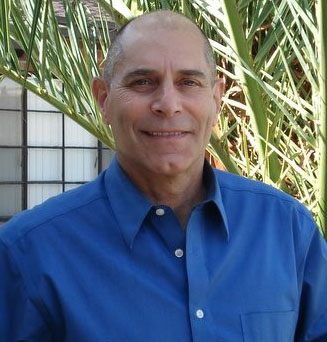
Mark Perlmutter
Founder, Planet Positive Investing
Stockbroker pioneer turned impact advocate, democratizing early-stage climate and food technology deals for everyday people. Learn more on our About Us page.
Ready to Back What Matters?
Planet Positive Investing is a free club of 30,000+ conscious members receiving curated equity crowdfunding deal alerts directly in their inbox. Join free and back real founders rebuilding our planet starting at $100.
Join Free — Get Impact Alerts